
Al dente is an Italian cooking term that means food is fully cooked but still firm when bitten, not soft or mushy.
People search this term to know if al dente is undercooked or correct, how it feels in the mouth, and how to achieve it perfectly at home.
This article explains the exact meaning of al dente, how it’s used in recipes, and how to know when pasta is cooked just right.
What Does Al Dente Mean
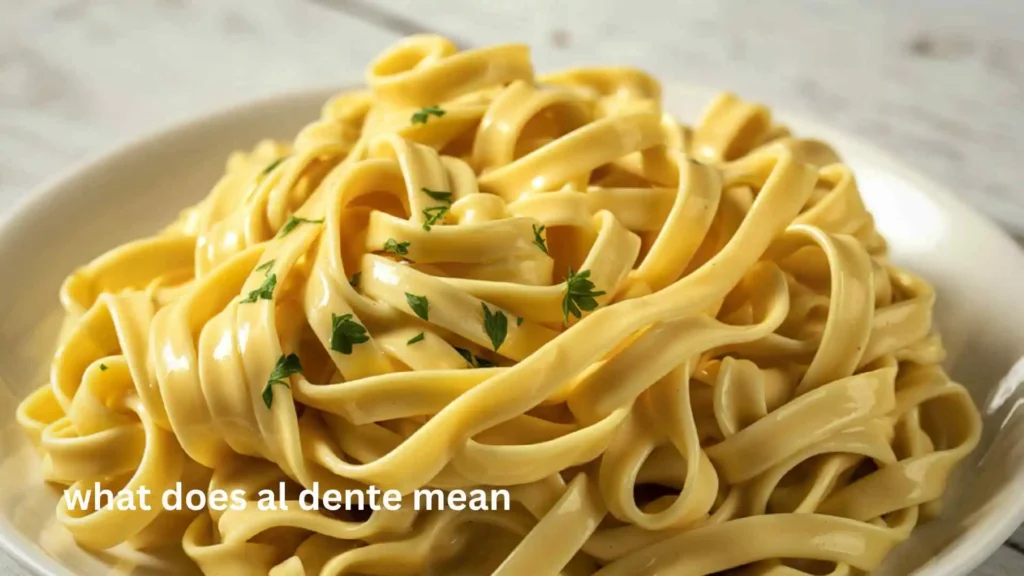
Al dente means “to the tooth” and describes pasta or rice that is tender on the outside with a slight firmness in the center.
It is fully cooked, not raw or undercooked.
Literal Meaning of Al Dente
The phrase comes from Italian, where “al” means to and “dente” means tooth.
Literally, al dente translates to “to the tooth.”
What Al Dente Means in Cooking
In cooking, al dente refers to the ideal level of doneness, especially for pasta.
Food cooked al dente holds its shape, texture, and flavor better.
Is Al Dente Undercooked
No, al dente is not undercooked.
Undercooked pasta tastes raw or chalky, while al dente pasta is pleasantly firm and safe to eat.
What Al Dente Feels Like When Eating
Al dente pasta feels soft on the outside with a gentle resistance when bitten.
There should be no hard white core in the center.
Why Recipes Say “Cook Al Dente”
Recipes recommend al dente so pasta doesn’t become mushy when mixed with sauce.
It also allows pasta to finish cooking in the sauce without overcooking.
How Long Does It Take to Cook Pasta Al Dente
Most dried pasta reaches al dente 1–2 minutes before the package time ends.
Fresh pasta cooks faster and often becomes al dente in 2–4 minutes.
How to Know Pasta Is Al Dente
The pasta is tender but firm when bitten.
It bends slightly without breaking.
The center shows no raw white core.
How to Cook Pasta Al Dente (Simple Method)
Boil pasta in well-salted water.
Stir occasionally to prevent sticking.
Taste-test before the timer ends.
Drain when the pasta has a firm bite.
Al Dente Meaning in Rice and Vegetables
Al dente also applies to rice and vegetables.
It means they are cooked through but still slightly firm, not soft or falling apart.
Is Al Dente Healthier
Yes, al dente pasta has a lower glycemic index than overcooked pasta.
This helps with slower digestion and better blood sugar control.
Why Chefs Prefer Al Dente

Chefs prefer al dente for its texture, appearance, and flavor balance.
It also prevents food from becoming overcooked during final plating.
Pronunciation of Al Dente
Al dente is pronounced “ahl DEN-teh.”
Correct pronunciation is common in professional kitchens.
Common Misunderstandings About Al Dente
Many people think al dente means raw, which is incorrect.
Others believe it only applies to pasta, but it also applies to rice and vegetables.
Final Thoughts
Al dente means “to the tooth” and describes food that is fully cooked yet firm, making it the preferred texture for pasta, rice, and vegetables in both home and professional cooking.
Discover More Topics:
- What Does Mames Mean | Complete Guide
- What Does Congruent Mean in Math | An Important Geometry Term Explained Simply

Lyra Wren is a contemporary fiction author who writes lyrical, emotionally driven stories exploring identity, healing, and the quiet power of inner transformation.
Books by Lyra Wren
-
Petals in the Quiet Wind
-
The Soft Weight of Becoming